Operating a real estate brokerage in Dubai involves more than generating leads, managing listings and closing transactions.
Brokerages also operate within the regulatory framework overseen by the Dubai Land Department (DLD) and its Real Estate Regulatory Agency (RERA).
This affects areas including brokerage licensing, broker registration, property advertising, marketing permits and the way real estate activities are conducted.
For brokerage owners and managers, the challenge is therefore not only understanding the requirements.
It is creating internal processes that help teams follow them consistently.
This guide explains some of the key operational areas Dubai real estate brokerages should understand in 2026 — and how structured CRM processes can support better control.
Important: This guide is for general operational information and does not constitute legal or regulatory advice. Requirements can change. Brokerages should verify current requirements directly with Dubai Land Department and RERA.
What Are DLD and RERA?
The Dubai Land Department (DLD) is the government entity responsible for regulating and developing Dubai's real estate sector.
The Real Estate Regulatory Agency (RERA) operates within DLD's regulatory framework and oversees areas relating to real estate activities and practitioners.
For a real estate brokerage, this means the company's daily operation needs to account for regulatory requirements alongside its commercial processes.
1. Real Estate Brokerage Licensing
A company cannot simply begin conducting regulated real estate brokerage activities because it has created a business entity and hired agents.
The appropriate real estate activity needs to be licensed.
Dubai Land Department's current licensing process uses the Trakheesi system for relevant real estate activities.
Depending on the activity and licensing structure, additional approvals or requirements may apply.
Brokerage owners should therefore make sure the activities they conduct match the activities for which the business is authorized.
2. Broker Registration and Broker Cards
The company isn't the only regulated part of the brokerage operation.
Individual real estate brokers must also meet applicable requirements.
DLD states that a broker working in Dubai must be registered in the brokers registry and hold the appropriate broker card.
This creates an important operational responsibility for brokerages.
Management should maintain clear records of:
Active brokers
Broker identification
Registration status
Relevant card information
Joining and leaving dates
Team allocation
Internal system access
As companies grow, maintaining accurate agent records becomes increasingly important.
3. What Is Trakheesi?
Trakheesi is an important DLD system used for real estate licensing and permit-related services.
Among other functions, it is used for real estate advertising permits.
For brokerages, this means Trakheesi should not be viewed as something only the administration team needs to understand.
Its requirements can directly affect marketing, listings and agent operations.
4. Dubai Real Estate Advertising Permits
Real estate advertising in Dubai is regulated.
DLD's published requirements state that real estate companies wishing to market or promote properties through relevant advertising channels must obtain the appropriate official permit.
The DLD advertising permit service covers multiple formats, including electronic advertisements, classified advertisements, promotional campaigns, open houses, printed advertisements and other promotional activities.
The applicable permit number must be displayed as required.
This has a direct operational impact on brokerages.
Before a listing is promoted, teams need a process for confirming that the required advertising information is available and valid.
5. What Is the Madmoun QR Code?
DLD introduced the Madmoun electronic service for real estate advertising permits.
The service provides a QR code associated with the advertising permit, allowing members of the public to verify information relating to the advertisement.
For brokerages, this adds another important control point between:
Property → Listing → Permit → Advertisement
Marketing teams and listing administrators should understand where permit information comes from and how it needs to appear in applicable advertising.
6. Advertising Information Needs to Be Controlled
A listing isn't simply marketing copy.
The information being advertised needs to correspond with the underlying property and applicable permit.
DLD's published advertising terms place responsibility on the advertising company for the validity and credibility of advertising content and require the company name and permit information in applicable advertisements.
For off-plan projects, additional project information is required under DLD's published advertising terms.
This makes listing governance important.
A brokerage should have clear internal responsibility for:
Who creates the listing?
Who checks the property information?
Who verifies permit information?
Who approves publication?
Who updates the listing when information changes?
Technology can support this workflow, but the company still needs to define the process.
7. Why CRM Data Quality Matters
CRM data quality isn't only a sales issue.
Incorrect information can affect:
Client communication
Property matching
Listing management
Internal reporting
Transaction records
Management decisions
Consider something as simple as a property listing.
If different agents maintain different versions of the property's price, availability or owner information, the brokerage loses control over its data.
Centralization helps create a more consistent operating environment.
8. Separate Regulatory Verification From CRM Automation
This distinction is important.
A CRM can store:
Listing information
Permit references
Documents
Agent records
Property information
Activities
Approvals
But storing information does not automatically prove that the underlying regulatory requirement has been satisfied.
For example:
CRM says permit number X
does not necessarily mean:
Permit X is currently valid.
Where regulatory verification is required, the brokerage should use the appropriate official DLD/RERA source or approved integration.
This is an important principle for any PropTech platform operating in Dubai:
Automation should support regulatory processes, not replace official verification.
9. Create a Listing Approval Workflow
One practical way technology can support better operational control is through approval workflows.
Instead of allowing every property to move directly from:
Created → Published
a brokerage may establish stages such as:
Draft
↓
Information reviewed
↓
Required documentation checked
↓
Permit information confirmed
↓
Manager/Admin approval
↓
Ready for publication
The exact workflow should reflect the brokerage's responsibilities and current DLD requirements.
The benefit is accountability.
Management can define who is responsible at each stage.
10. Maintain Clear Agent Permissions
CRM permissions also matter.
Not every employee necessarily needs permission to:
Edit property information
Publish listings
Modify transactions
Approve deals
Export databases
Change commission structures
Access all company leads
Permissions should reflect roles and responsibilities.
For example:
Agent
Manages assigned leads, activities and permitted listings.
Team Leader
Reviews team performance and relevant opportunities.
Listing Administrator
Controls property/listing information.
Transaction Coordinator
Manages transaction-related processes.
Management
Approves defined activities and monitors business performance.
A structured permission model helps reduce unnecessary changes to sensitive operational information.
11. Maintain an Activity History
When important actions occur inside the brokerage, it is useful to maintain a record.
Depending on the platform and workflow, this can include:
Lead assignment
Status changes
Notes
Tasks
Listing updates
Approval actions
Transaction updates
This creates better accountability and helps management understand how a record progressed.
12. Connect Listings With Owners
A property listing should not exist as an isolated piece of marketing content.
Where appropriate, the brokerage should maintain structured information connecting:
Owner → Property → Listing → Responsible Agent → Activity
This gives management greater visibility over who supplied the inventory and how it is being managed.
It also helps reduce duplicate or disconnected property records.
13. Control Access When Agents Leave
Employee departures create an important data-management issue.
When an agent leaves the brokerage, management should have a defined offboarding process.
This may include:
Disabling CRM access
Reassigning active leads
Reassigning tasks
Reviewing active listings
Reviewing owner relationships
Transferring relevant records
Removing unnecessary system permissions
A centralized CRM makes this easier than having important business information spread across individual spreadsheets and devices.
14. Keep Transaction Information Structured
Once a client progresses into a transaction, the brokerage should maintain clear records of the deal.
Depending on the transaction type and company process, this can include:
Client
Property
Responsible agent
Transaction type
Deal stage
Supporting documents
Internal approvals
Commission information
Important dates
This creates continuity between the sales process and the completed business.
15. Don't Confuse CRM Records With Official Government Records
This deserves repeating.
The CRM is the brokerage's internal operating system.
DLD/RERA systems are official regulatory sources.
They serve different purposes.
The best technology architecture connects operational efficiency with authoritative data where integrations or verification services are available.
A brokerage should not assume that information stored internally overrides or replaces official government records.
How CRM Can Support Better Brokerage Governance
A well-structured real estate CRM can help management create consistency around:
Lead Governance
Who received the inquiry?
What happened?
What is the next action?
Listing Governance
Who created the listing?
What information is stored?
Has the required internal review taken place?
Access Governance
Who can view, edit, approve or export information?
Transaction Governance
What stage is the transaction in?
What documentation and approvals are required?
Performance Governance
Are teams following the agreed operating process?
This is where CRM becomes more than sales software.
It becomes part of the brokerage's operational infrastructure.
How Pixxi Supports Structured UAE Brokerage Operations
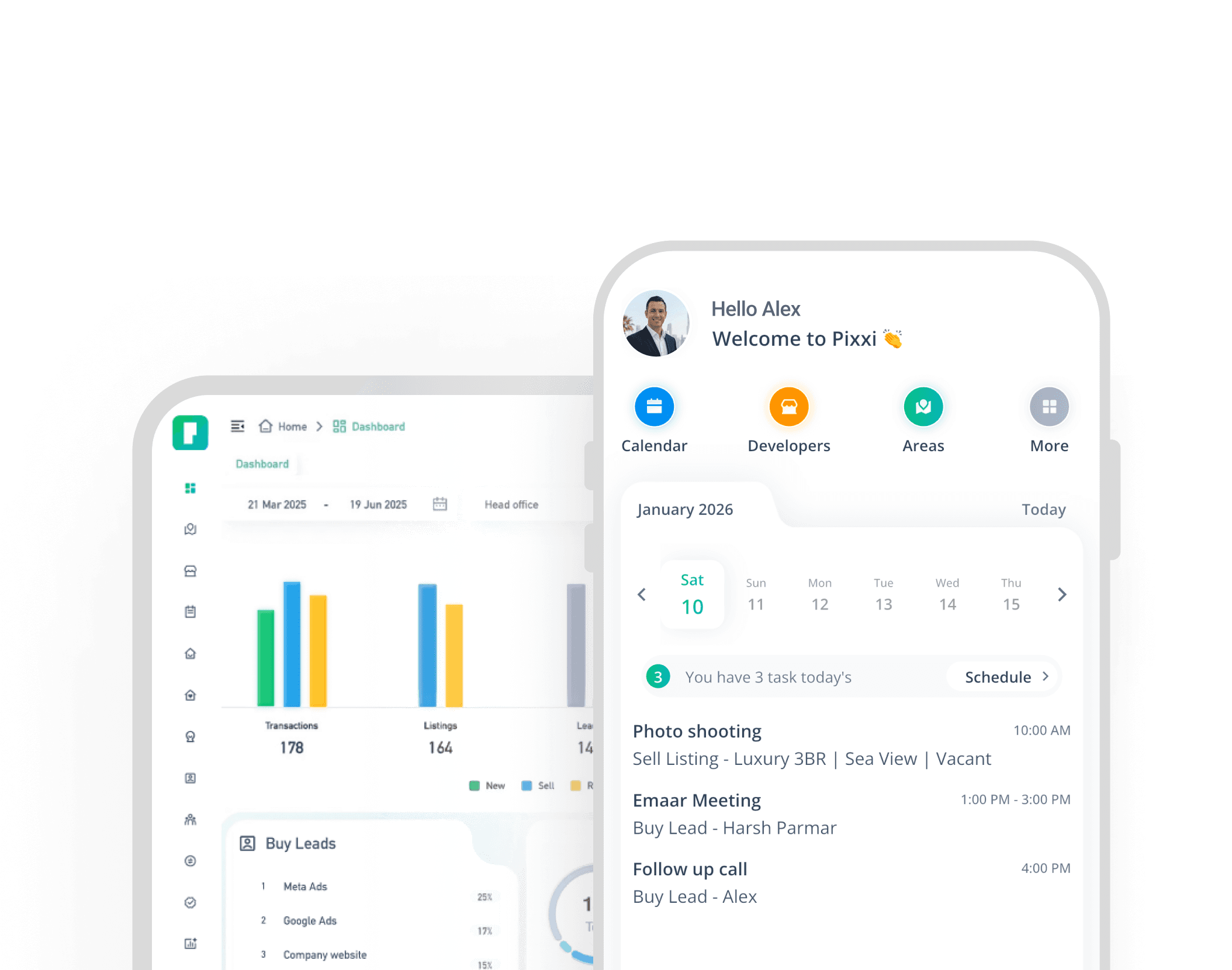
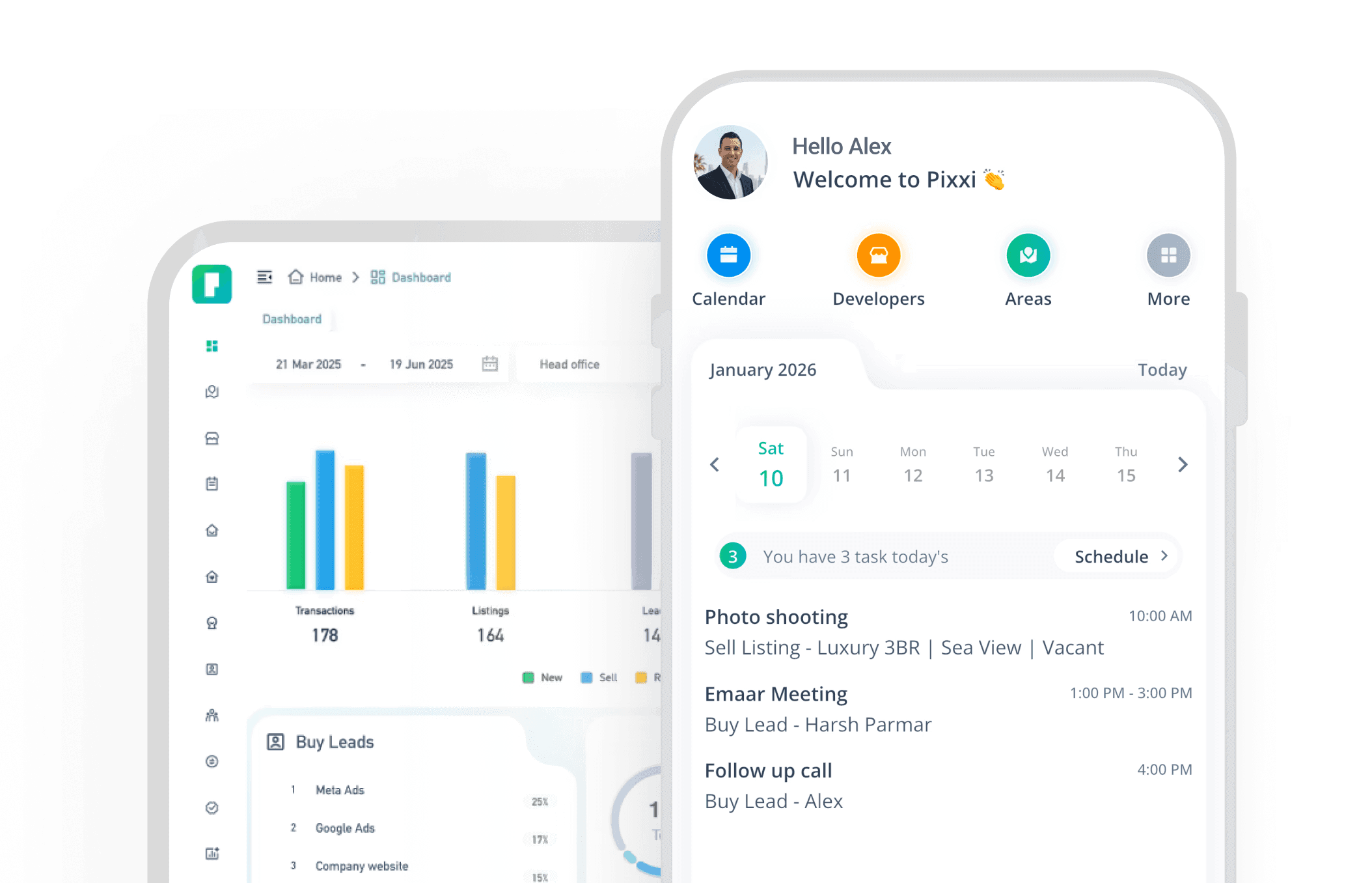
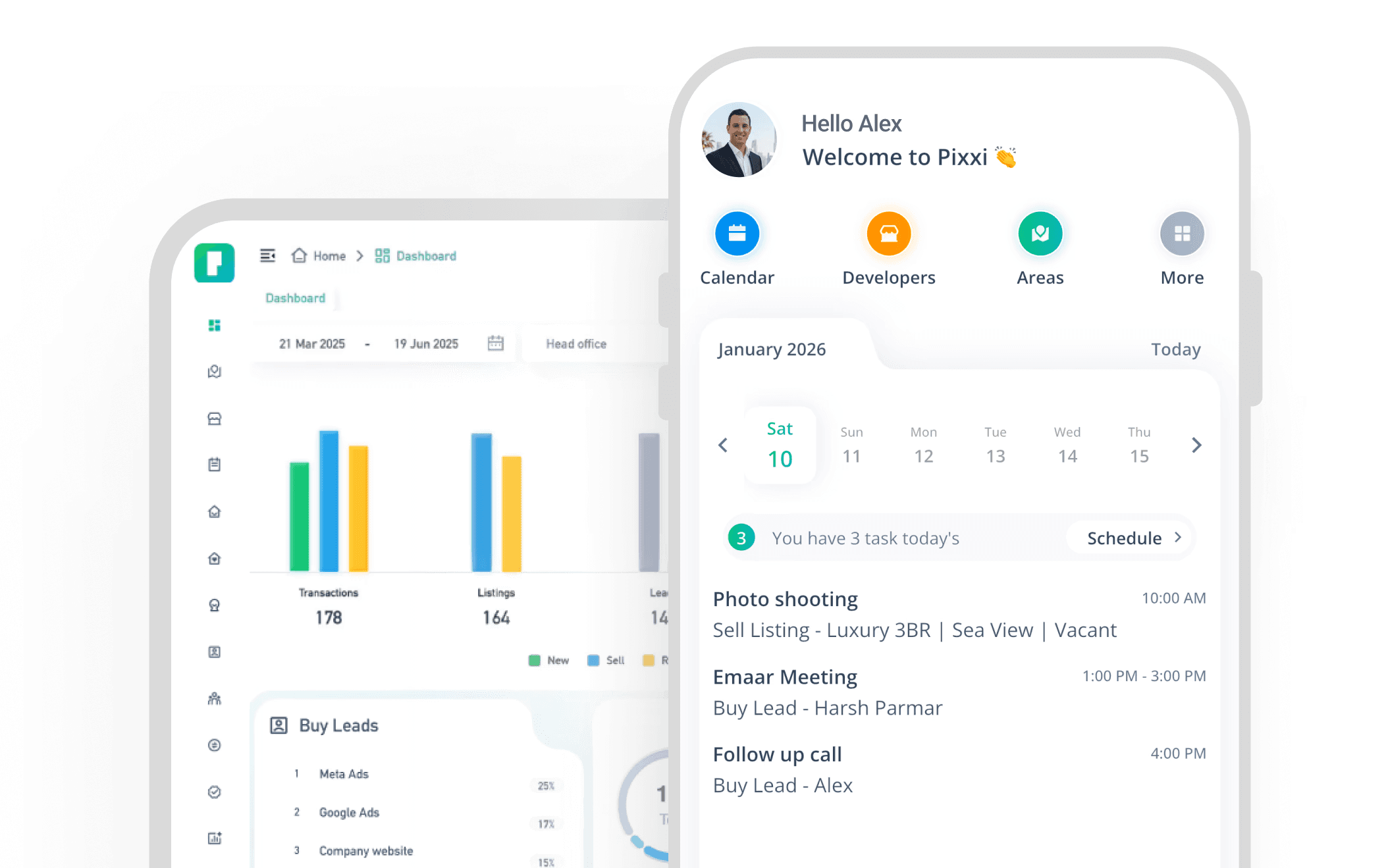
Pixxi CRM is built around the operational requirements of UAE real estate brokerages.
The platform allows companies to centralize areas including:
Leads
Listings
Owners
Off-plan projects
Transactions
Commissions
Documents
Tasks
Teams
Permissions
Approval workflows
Agent activities
KPI reporting
This gives management a structured environment for defining how information moves through the brokerage.
For example, a company can establish processes around:
Lead received → Assigned → Actioned
Listing created → Reviewed → Managed
Transaction created → Reviewed → Approved
The CRM supports the workflow.
The brokerage remains responsible for ensuring that its activities meet applicable legal and regulatory requirements.
Dubai Brokerage Operational Checklist
Brokerage management should periodically review questions such as:
Company
Is the company appropriately licensed for the real estate activities it conducts?
Brokers
Are relevant brokers properly registered and holding the required cards?
Advertising
Are applicable advertising permits obtained through the required DLD process?
Permit Information
Is required permit information displayed correctly?
Listings
Is property information controlled before publication?
Permissions
Can only authorized employees perform sensitive actions?
Data
Is client and property information centralized and maintained consistently?
Transactions
Are transaction records and approvals structured?
Offboarding
Is there a defined process when an agent leaves?
Verification
Does the company verify regulatory information through appropriate official sources when required?
This isn't a replacement for a legal or regulatory review.
It is an operational starting point.
Frequently Asked Questions
What is DLD?
Dubai Land Department is the government entity responsible for regulating and developing Dubai's real estate sector.
What is RERA?
The Real Estate Regulatory Agency operates within Dubai's real estate regulatory framework and oversees areas relating to real estate activities and practitioners.
What is Trakheesi?
Trakheesi is a Dubai Land Department system used for real estate licensing and permit-related services, including real estate advertising permits.
Do Dubai real estate advertisements require permits?
DLD publishes requirements for real estate companies to obtain official permits for applicable real estate advertising and promotional activities. Brokerages should verify the current requirements directly with DLD before publishing advertising.
What is the Madmoun QR code?
Madmoun is DLD's electronic service associated with real estate advertising permits. Its QR code allows users to verify information relating to a permitted real estate advertisement.
Does using a CRM make a brokerage DLD compliant?
No. CRM software can help organize data, permissions, workflows and records, but regulatory compliance remains the responsibility of the brokerage. Official requirements should be verified through DLD/RERA.
Can CRM software verify a broker's RERA status?
A CRM can store broker information. Official verification should rely on current authoritative DLD/RERA information or an approved data integration where available.
Technology Should Support Compliance — Not Pretend to Replace It
The strongest real estate technology doesn't promise to make regulation disappear.
It makes the brokerage's internal processes more structured.
Dubai brokerages need to manage two environments simultaneously:
The regulatory environment
DLD → RERA → Trakheesi → official permits and records
and
The operational environment
Leads → Agents → Listings → Clients → Transactions → Commissions
A well-designed CRM helps organize the second while supporting processes that respect the first.
For growing UAE brokerages, that combination of technology, process and accountability is becoming increasingly important.
Pixxi CRM is built specifically around UAE real estate brokerage operations, helping companies centralize their workflows while maintaining clearer control over their teams, listings, transactions and business data.
Want to see how your brokerage workflows can be structured inside Pixxi? Book a demo with our team.
Last reviewed: September 2026. Regulatory information should always be verified directly with Dubai Land Department and RERA before relying on it.
Experience the fastest, most complete real estate CRM on mobile
With Pixxi, your entire business travels with you real-time updates, instant lead access, and seamless team communication.