Introduction
Many real estate agencies in the UAE still rely on Excel sheets to manage leads, listings, and deals.
At the beginning, it works.
But as the business grows more leads, more agents, more transactions Excel starts to create more problems than it solves.
This is where the difference between Excel and a real estate CRM becomes clear.
Why Agencies Start with Excel
Excel is simple and familiar.
Agencies use it to:
Track leads
List properties
Record client details
Monitor deals
For small teams, this can be enough at the early stage.
Where Excel Starts to Break
As operations grow, Excel becomes difficult to manage.
Common challenges include:
No real-time updates across the team
Manual data entry
High risk of errors or duplication
No structured follow-up system
Limited visibility for management
In a fast-moving market like Dubai, these gaps lead to missed opportunities.
What a Real Estate CRM Does Differently
A real estate CRM is built specifically to manage daily operations.
Instead of manual tracking, it provides:
Centralized lead management
Automatic lead assignment
Tracking of all client interactions
Listing management across platforms
Deal and commission tracking
Everything is connected in one system.
CRM vs Excel The Key Differences
Excel | Real Estate CRM |
Manual updates | Automated workflows |
Static data | Real-time tracking |
Individual use | Team-wide visibility |
No reminders | Follow-up tracking |
Limited scalability | Built for growth |
Impact on Lead Management
With Excel:
Leads can be missed
Follow-ups are inconsistent
No clear ownership
With a CRM:
Leads are captured and assigned instantly
Every interaction is tracked
Follow-ups are structured
This directly affects conversion rates.
Impact on Team Performance
Excel makes it difficult for managers to track:
Agent activity
Deal progress
Team performance
A CRM provides full visibility, helping managers make better decisions and keep teams aligned.
When Should You Move to a CRM?
Agencies usually need a CRM when:
Lead volume increases
Multiple agents are involved
Follow-ups become inconsistent
Data becomes hard to manage
At this stage, Excel is no longer efficient
Final Thought
Excel is useful at the beginning.
But it is not designed for real estate operations at scale.
A real estate CRM provides the structure, visibility, and consistency that agencies need to grow in the UAE market.
Is your agency still managing operations manually or using a system built for real estate?
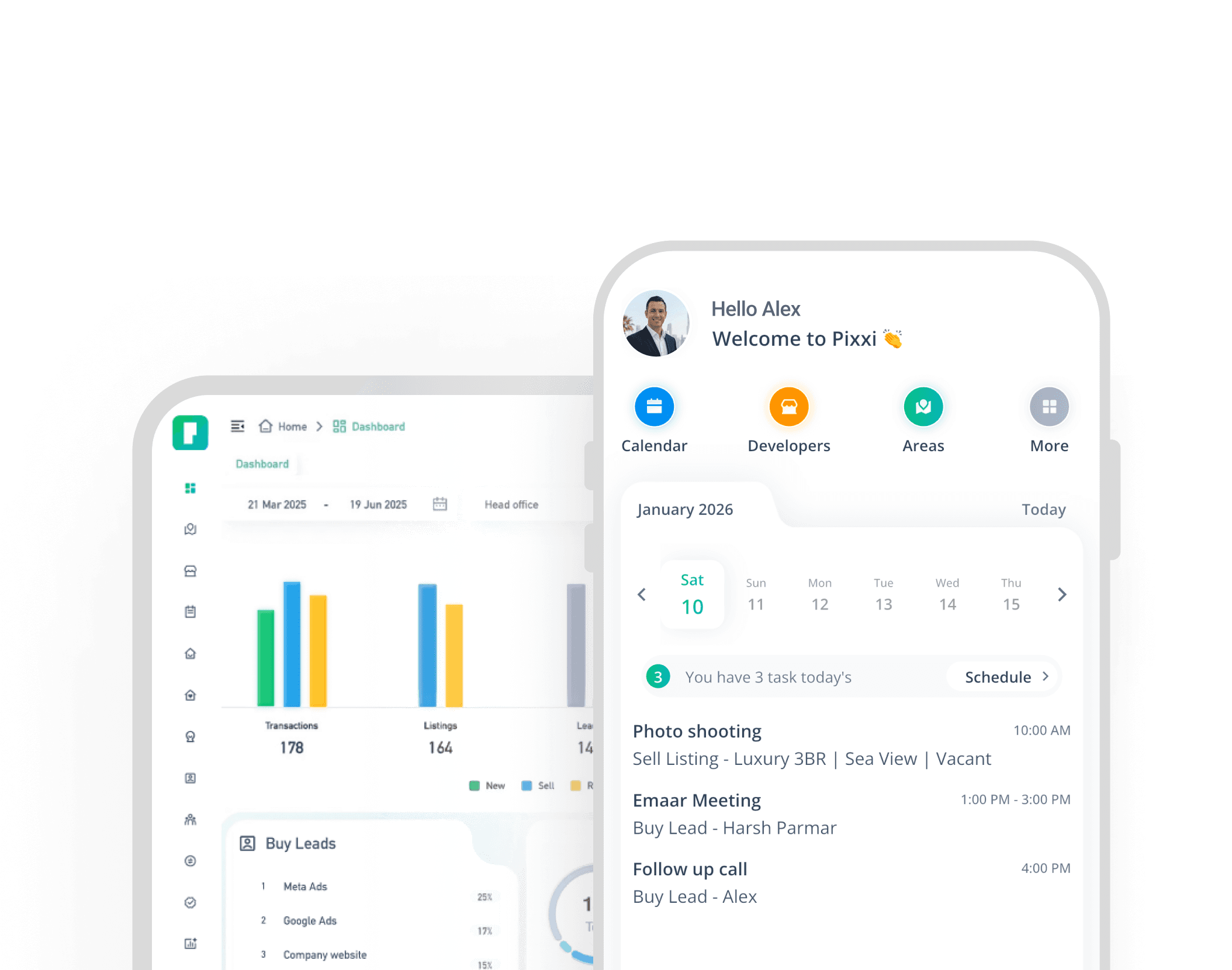
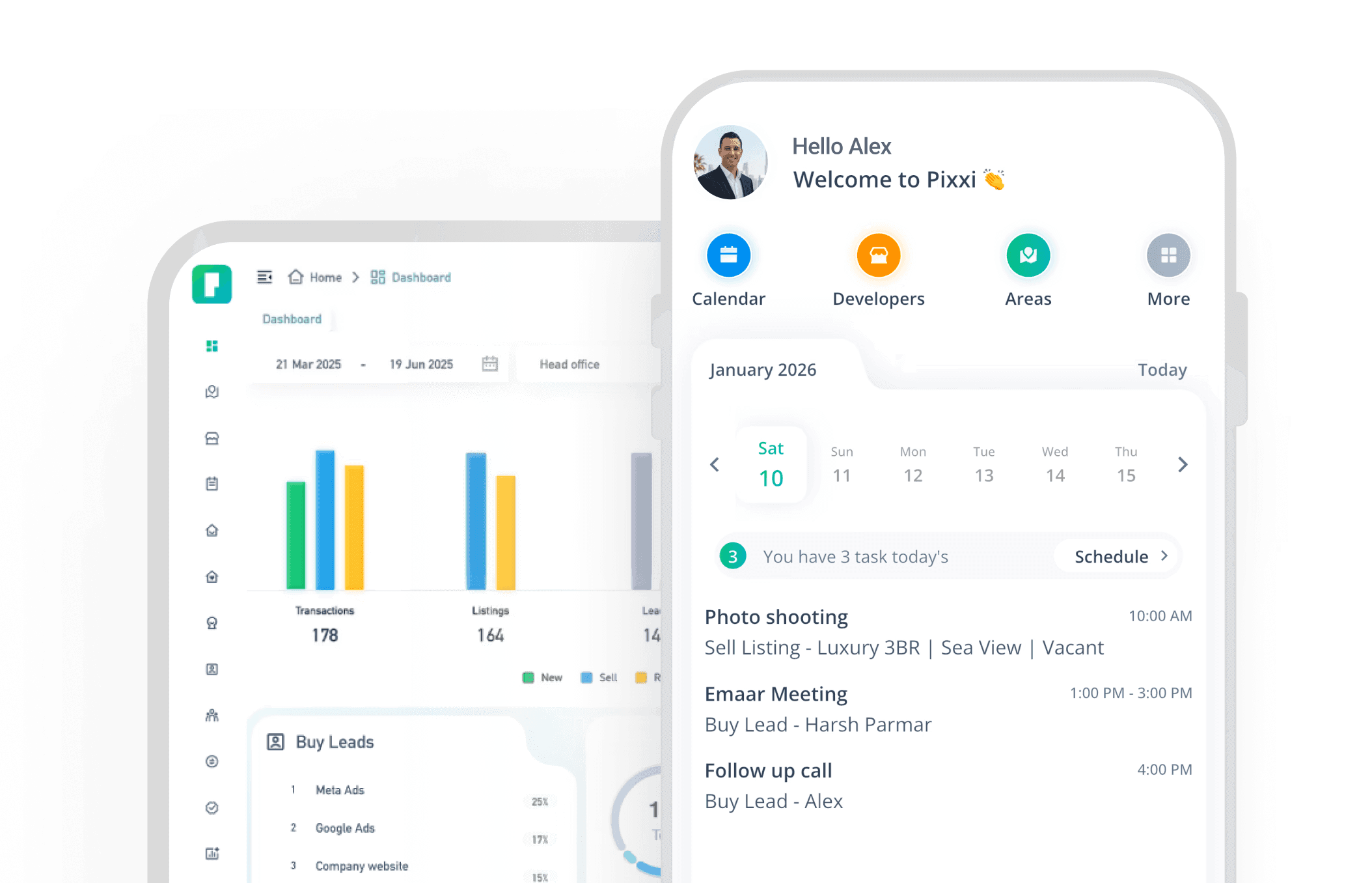
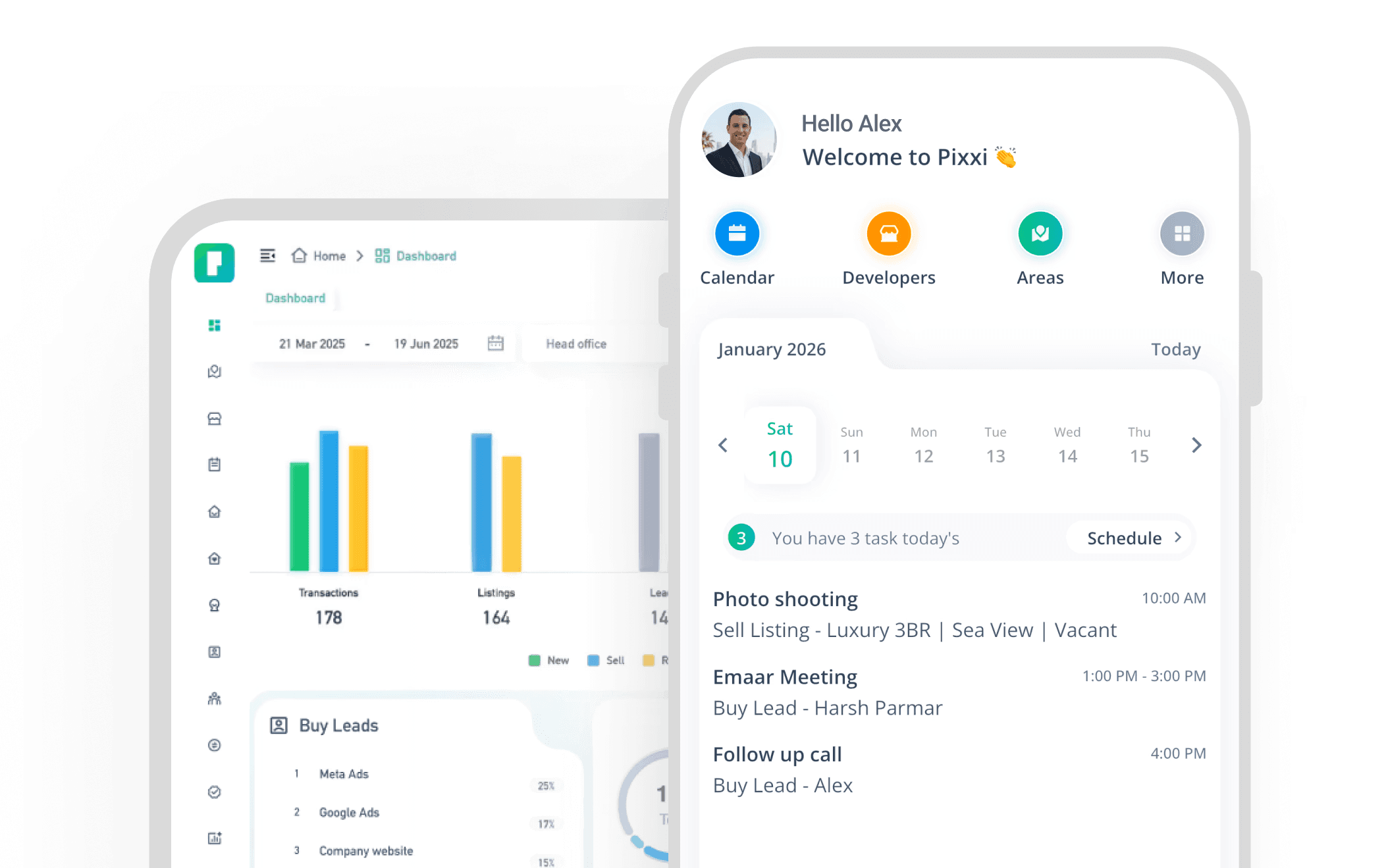
Experience the fastest, most complete real estate CRM on mobile
With Pixxi, your entire business travels with you real-time updates, instant lead access, and seamless team communication.