A CRM is a CRM. Right?
Not exactly.
Most customer relationship management platforms are built around a relatively straightforward sales process: capture a prospect, move them through a pipeline, close the opportunity and maintain the customer relationship.
Real estate brokerage operations are different.
A single deal can involve a lead, an agent, an owner, a property, a listing, multiple viewings, negotiations, documents, commissions and different internal approvals.
In the UAE, there is another layer: property portals, large listing inventories, high lead volumes and fast-moving agent teams.
This is where the difference between a traditional CRM and a real estate CRM becomes important.
What Is a Traditional CRM?
A traditional CRM is primarily designed to help businesses manage relationships with prospects and customers.
Its core functions typically revolve around:
Contact management
Sales pipelines
Tasks and activities
Email communication
Sales reporting
Marketing automation
Customer history
For many industries, this structure works extremely well.
But a real estate brokerage does not only manage customers.
It manages an entire network of people, properties and transactions.
That requires a different operational structure.
What Makes a Real Estate CRM Different?
A real estate CRM connects customer relationship management with the day-to-day processes of a brokerage.
Instead of seeing a buyer as simply a contact in a pipeline, the system needs to understand the buyer's requirements.
Instead of storing an owner as another customer, it should connect that owner with their properties and listings.
Instead of ending the workflow when an opportunity is marked as won, the system may need to continue into transaction and commission management.
The difference is not simply additional features.
It is how the information connects.
Leads Need More Than a Sales Pipeline
Dubai brokerages can receive inquiries from multiple channels, including property portals, websites and digital marketing campaigns.
Managing these leads requires more than placing contacts into different stages.
Brokerages need to know:
Where did the lead come from?
Which agent received it?
Was it contacted?
What property is the client interested in?
What are their requirements?
What is the next follow-up?
Did the lead eventually become a deal?
A real estate CRM should connect these questions within one workflow.
Listings Change the Entire CRM Structure
This is one of the biggest differences between traditional and real estate CRM platforms.
In most industries, there is no equivalent of a constantly changing property inventory.
Real estate companies need to manage listings alongside their customer database.
That can include information about:
Properties
Owners and landlords
Listing agents
Availability
Property details
Media and documents
Portal publication
Potential buyers or tenants
When listings and leads exist in separate systems, agents have to manually connect supply with demand.
A real estate-specific platform can bring these two sides of the business together.
Lead and Listing Matching Creates More Value From Existing Data
Brokerages often focus heavily on generating new leads.
But there may already be opportunities sitting inside the existing database.
A buyer looking for a specific property type may match a newly available listing.
A tenant inquiry from weeks ago may suddenly become relevant when the right unit enters the inventory.
When leads and listings are structured inside the same ecosystem, agents can identify these connections more efficiently.
The database becomes something the brokerage can actively work with not simply a record of past inquiries.
UAE Brokerages Also Need Portal Connectivity
The UAE market has another important operational requirement: property portals.
Property Finder, Bayut and dubizzle play a major role in how properties are marketed and how inquiries enter brokerages.
For this reason, CRM selection in the UAE should consider how the system works with the local property ecosystem.
A global traditional CRM may be highly sophisticated but still require significant customization or additional integrations to support the daily workflows of a Dubai brokerage.
Transactions Don't End at “Deal Won”
In a standard sales CRM, moving an opportunity to Won may represent the end of the sales process.
For a brokerage, it can be the beginning of another important operational stage.
The company may still need to manage:
Transaction information
Internal approvals
Agent commissions
Commission splits
VAT
Deal documentation
Revenue reporting
If these processes move immediately into spreadsheets after a deal closes, management loses part of the operational picture.
A connected real estate CRM can maintain visibility beyond the sales pipeline.
Agent Performance Is Different From Standard Sales Performance
Real estate agents operate differently from traditional sales representatives.
Their performance may involve lead activity, listings, viewings, transactions, commissions and conversion.
Managers therefore need visibility across more than calls made or opportunities closed.
The goal is to understand the complete picture:
What is happening across the brokerage, and where is performance coming from?
A real estate CRM should make that information easier to understand.
Mobility Matters in Real Estate
Real estate does not happen only inside an office.
Agents move between property viewings, developer launches, client meetings and listing appointments throughout the day.
That makes mobile CRM access particularly important.
A brokerage system should allow agents to stay connected to their work even when they are away from their desks.
The easier the system is to use during the agent's actual working day, the stronger CRM adoption can become.
Can a Traditional CRM Still Work for a Brokerage?
Yes.
Traditional CRM platforms can be extremely powerful, particularly when heavily customized and connected to additional systems.
For some organizations, this approach may make sense.
But brokerages should consider the full cost and complexity involved.
Ask:
How much customization will be required?
Which real estate workflows need separate tools?
How will listings be managed?
How will property portals connect?
Where will transactions and commissions sit?
How much manual work will remain?
The question is not whether a traditional CRM can work.
The question is how much work is required to make it operate like a real estate CRM.
What Should UAE Brokerages Look For?
When evaluating a CRM, UAE real estate companies should look beyond the feature list.
Consider whether the system can connect the major parts of the brokerage:
Leads
Agents
Listings
Deals
Commissions
Performance
When these areas operate within the same ecosystem, management gains something particularly valuable: visibility.
Instead of collecting updates from multiple departments and spreadsheets, leaders can understand what is happening across the business from one system.
Built Around Real Estate Operations
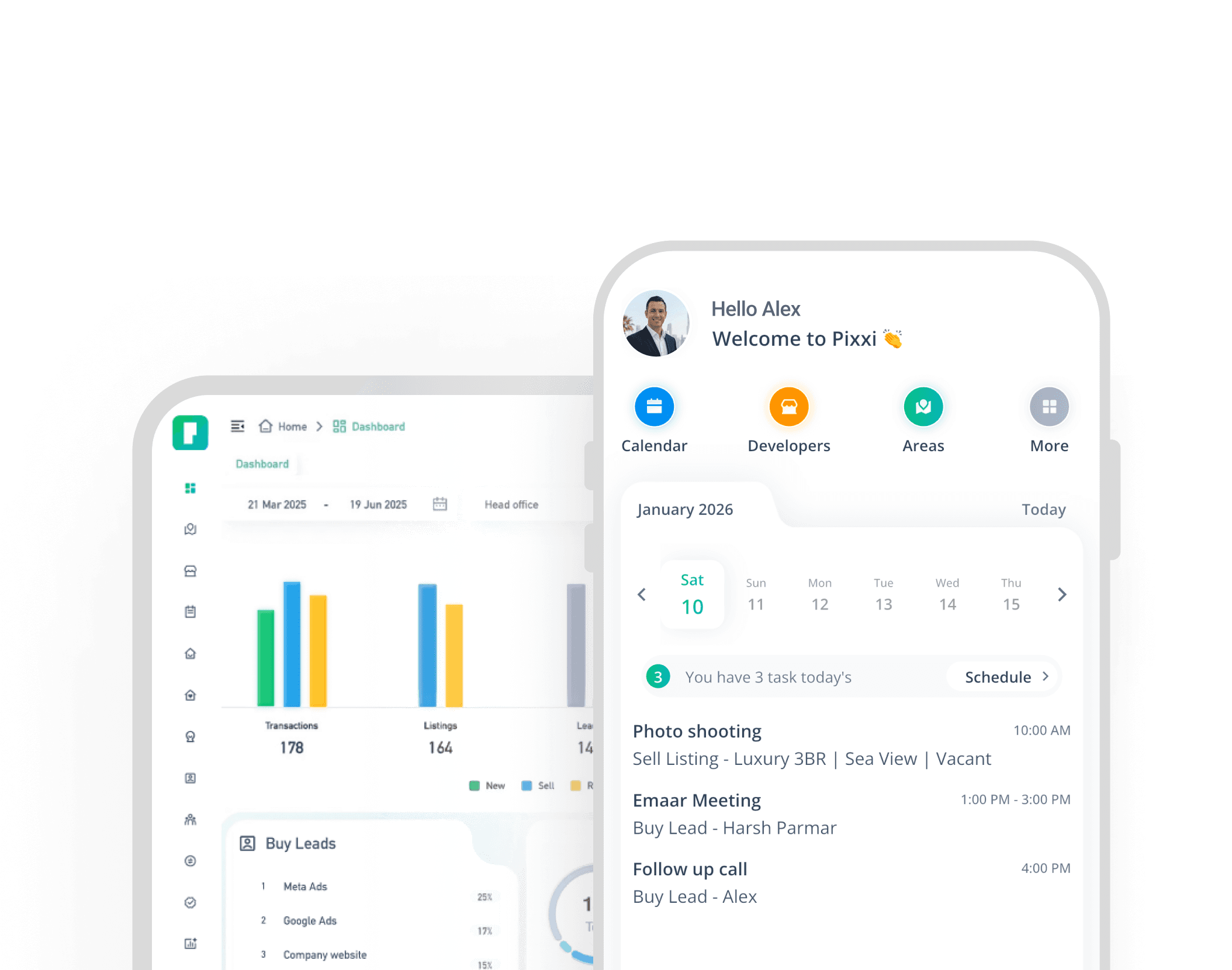
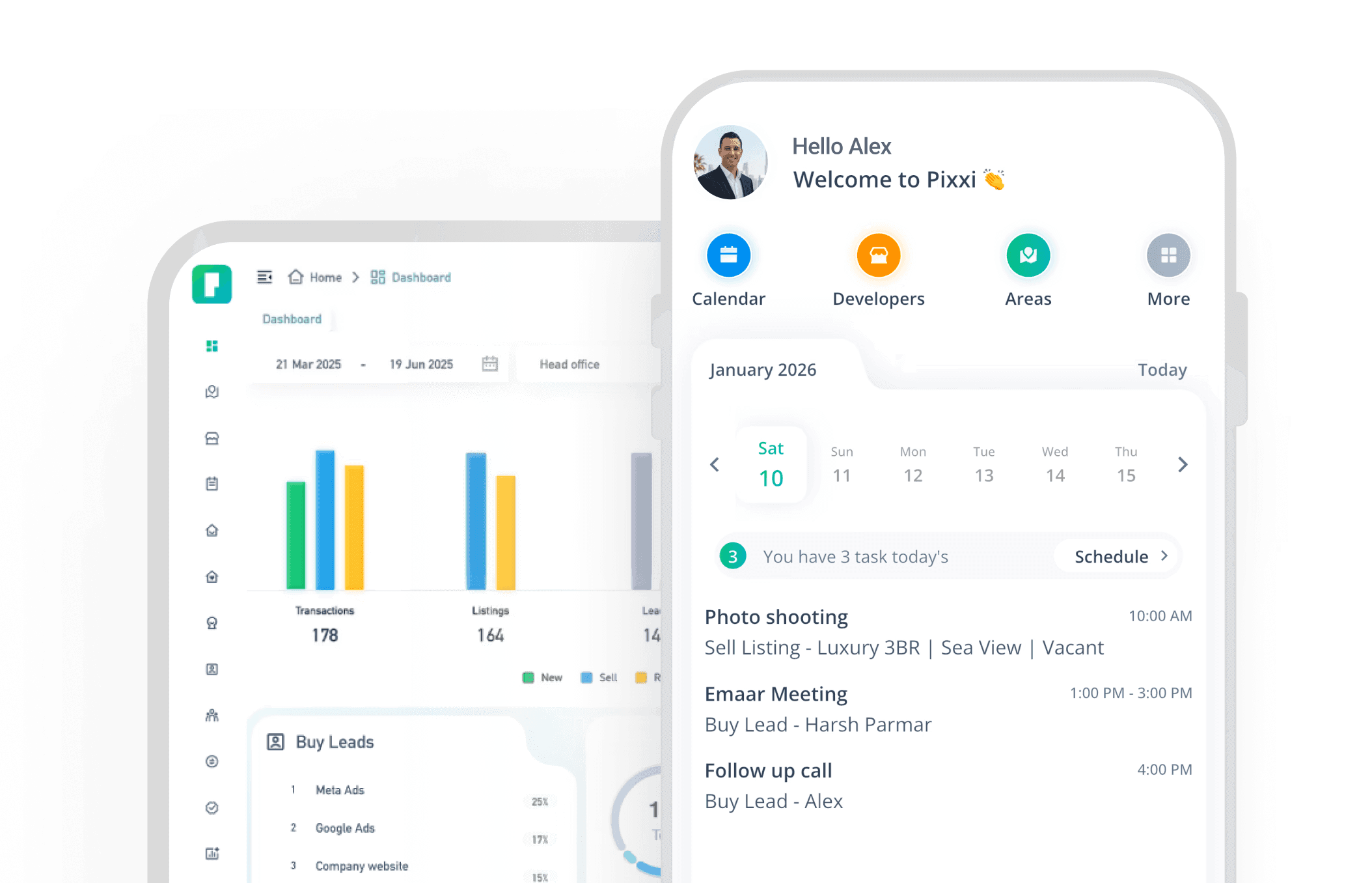
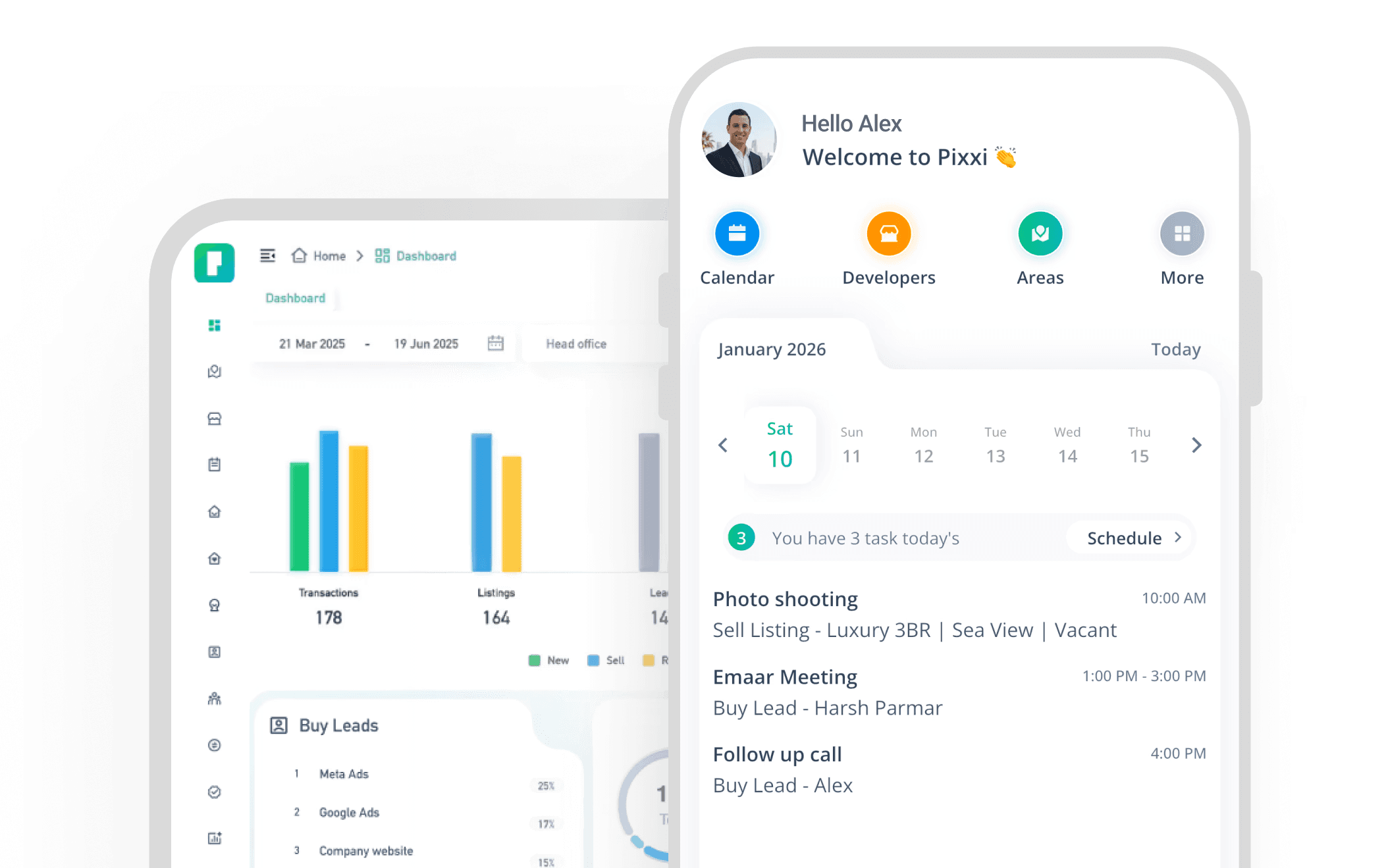
Pixxi CRM is designed specifically around the operational requirements of real estate brokerages.
It connects lead management, agent activity, listings, transactions, commissions and performance within one structured ecosystem.
For UAE brokerages, Pixxi also supports the local workflows and integrations that teams interact with every day.
This means companies can spend less time trying to transform a generic CRM into a real estate system and more time building processes around the way their brokerage actually operates.
The Best CRM Is the One That Fits the Business
There is no universal CRM that is perfect for every company.
A traditional CRM can be the right solution for many industries and even for certain real estate organizations with specific requirements and resources.
But brokerages should evaluate CRM technology based on their real operational needs.
Because a real estate company does not simply manage customers.
It manages leads, agents, properties, listings, deals, commissions and performance simultaneously.
And the technology behind the brokerage should be built to understand that complexity.
Pixxi CRM brings your real estate operations into one connected ecosystem built around the way UAE brokerages actually work.
Experience the fastest, most complete real estate CRM on mobile
With Pixxi, your entire business travels with you real-time updates, instant lead access, and seamless team communication.